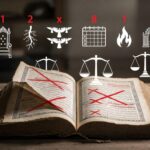
The Strategic Paradox
Islam presents two seemingly contradictory teachings that have puzzled minds for centuries:
- On one hand, Predestination (Taqdir/Qadar): Everything in the universe — from the movement of a leaf to the destiny of every human — is already decreed by Allah. Nothing happens except by His will.
- On the other hand, Free Will: Humans are fully responsible for their choices and will be judged and sent to Heaven or Hell based on their actions.
If everything is already predestined, how can humans be held accountable for their deeds? This paradox is not merely a theological puzzle — it served as a powerful political tool for control.
The Hidden Purpose: Political and Religious Control
Muhammad needed both contradictory concepts to effectively lead and expand his movement. This dual doctrine created a perfect psychological and political mechanism.
1. Free Will: The Incentive for Action and Sacrifice
To build a dynamic, motivated, and sacrificial community, people must believe their efforts matter. If followers were told that everything is already written and nothing can be changed, they would become passive and unmotivated.
Therefore, the concept of Free Will was emphasized:
- Your jihad, your prayers, your obedience, and your sacrifices will determine your eternal fate.
- Paradise with its houris and Hell with its torments were presented as direct consequences of personal choice.
This belief motivated believers to fight, migrate, donate wealth, and obey Muhammad’s commands with full dedication, believing they were shaping their own destiny.
2. Predestination: The Shield Against Accountability
No leader can guarantee constant success. Defeats, unfulfilled promises, and crises are inevitable.
This is where Predestination proved extremely useful. Whenever something went wrong — a lost battle, economic hardship, or failed prophecy — it was immediately attributed to “Allah’s Will” and “Pre-destined Decree.”
Believers were taught:
- Do not question failures.
- Be patient with Allah’s decree.
- Even suffering is a test.
This doctrine effectively protected Muhammad and later Muslim leaders from criticism and rebellion.
A Perfect “Heads I Win, Tails You Lose” System
This combination created an unfalsifiable control mechanism:
- Success → Credited to strong faith, good deeds, and correct choices → Encourages more zeal and obedience.
- Failure → Attributed to Allah’s Will and divine wisdom → Prevents questioning the leadership.
No matter the outcome, the system always wins. The conclusion remains the same: “Islam is true. Keep obeying.”
Evidence from Islamic Texts: Predestination Dominates
Despite claims of balance, Islamic sources repeatedly show that Predestination overrides Free Will:
- Adam vs Moses Hadith Moses blamed Adam for humanity’s expulsion from Paradise. Adam replied: “O Moses! Do you blame me for something Allah had decreed for me before I was even created?” Muhammad declared that Adam won the argument. (Sahih Bukhari 6614)
- Quran 6:125: “Whomever Allah wills to guide, He opens his heart to Islam; whomever He wills to misguide, He makes his chest tight…”
- Quran 2:7: “Allah has sealed their hearts and their hearing…”
- Quran 10:99: “If your Lord had willed, everyone on earth would have believed.”
- Quran 57:22: “No disaster strikes except that it was written in a decree before We bring it into existence.”
These verses make it clear that guidance, misguidance, belief, disbelief, and even disasters are ultimately decided by Allah.
How Muhammad Used This Paradox Politically
- When he needed mobilization and sacrifice → He emphasized Free Will and personal responsibility.
- When he needed to avoid blame for setbacks (such as the defeat at Uhud) → He switched to Predestination: “Say: Nothing will befall us except what Allah has decreed for us.” (Quran 9:51)
Later Umayyad Caliphs took this even further, using Predestination to justify their tyrannical rule: “Our rule is Allah’s decree. Even our oppression is by His will.”
Conclusion: A Masterful Psychological Trap
The contradiction between Predestination and Free Will was not an intellectual flaw — it was a deliberate and highly effective tool of control. It:
- Maximized follower motivation and effort.
- Minimized accountability for leadership failures.
- Made questioning the system almost impossible.
- Ensured loyalty regardless of outcomes.
This “Divine Trap” transformed ordinary people into a disciplined, obedient, and self-sacrificing force that executed the leader’s will — all while believing they were serving God’s plan.
In the end, whether they succeeded or failed, the believers’ conclusion was always the same: “Islam is true. Muhammad is right. Keep obeying.”