Hello friends, I am an Ex-Muslim who has stepped out of the extremism of Islam and is now in search of truth. In my blog, I often discuss those interpretations of Islam that divide society and weaken national unity. Today, I will talk about the recent controversy surrounding “Vande Mataram.” The central government has issued new guidelines to give full respect to this national song, but some Muslim organizations have called it an attack on religious freedom. Reading about this issue made me feel that this is not just about a song, but about that extremist mindset which, in the name of Islam, rejects nationalism. Let’s discuss this in depth.
The Historical Significance of Vande Mataram and the Government’s Step
First, let’s recall what “Vande Mataram” is. It is a song composed by Bankim Chandra Chattopadhyay in 1875, included in his novel *Anandamath*. This song became a symbol of the Indian independence struggle, where revolutionaries embraced death while singing it. Madam Bhikaji Cama hoisted the tricolor abroad with faith in it, and countless martyrs made it their last words. In 1950, Dr. Rajendra Prasad gave it a status equivalent to the national anthem “Jana Gana Mana.”
Now, on the occasion of its 150th anniversary, the central government has introduced new rules: all six stanzas are mandatory, the full singing lasts 3 minutes and 10 seconds, it must be played at government programs, and it should be sung before the national anthem. If both are performed together, “Vande Mataram” comes first. This step is aimed at strengthening patriotism, which has been suppressed for decades due to appeasement politics. Not making it mandatory in cinemas is practical to preserve its dignity. I believe this is a step in the right direction—respecting national symbols is the duty of every citizen.
Opposition from Muslim Organizations: An Old Script
But as soon as this order came out, Maulana Arshad Madani of Jamiat Ulama-e-Hind said it is an attack on religious freedom. His argument? The song portrays the motherland as a “deity,” which goes against Islam’s monotheism (Tauheed). The AIMPLB called it illegal and threatened to go to court. Leaders like Shoaib Jamei and Imran Masood cite Article 25.
As an Ex-Muslim, I ask: Is calling the motherland “Mother” and saluting her really against Allah? “Vande Mataram” means “Mother, I bow to you.” This is not worship, but respect. In Islam, respecting parents is mandatory—so why not the land of one’s birth? This argument seems ridiculous to me. Nowhere in the Quran is it written that loving one’s land is shirk (polytheism). This is an extremist interpretation that turns Islam into a political weapon. I myself left Islam because such interpretations place religion above humanity.
Jinnah’s Legacy: From 1937 to 2026
This opposition is not new. In 1908, the Muslim League began it; in 1937, Jinnah called it “anti-Muslim.” Nehru bowed to appeasement, and Congress limited the song to just two stanzas. The result? The country’s partition. Today, Madani, Owaisi, Shafiqur Rahman Barq speak the same language. Fatwas from Deoband, boycott in the Bihar assembly, opposition in Parliament—this is separatism. Some Sikh organizations have also jumped in, calling it “imposition of Hindutva.”
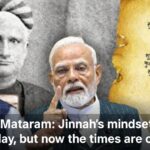
I feel this is like a “mini Muslim League.” Jinnah’s thinking—that religion is above the nation—is still alive today. But now the times are changing. Modi ji has said “Vande Mataram” 121 times in Parliament, which is an answer to those forces.
In My View, the Problem Is Extremism, Not the Religion
As an Ex-Muslim critic, I say the problem lies not just in Islam but in its extremist interpretations. If Allah is omnipresent, what harm is there in bowing to the earth? This mindset views nationalism through the lens of religion, which is dangerous. Even in Pakistan, they sing their national anthem, but why the opposition here in India? Because here there is democracy, where such thinking flourishes.
Article 25 of the Constitution gives religious freedom, but not the right to insult national symbols. If someone refuses to sing the song, it raises questions about their citizenship. I remember when I was a Muslim, such things made me uncomfortable. But after stepping out, I understood that the nation comes first.
Conclusion: The Need for a United India
Friends, “Vande Mataram” is a symbol of national unity. Viewing it through a religious lens is wrong. The government’s step is correct—it will end appeasement and strengthen patriotism. If you are also an Ex-Muslim or question Islam, let me know in the comments. Do you think such thinking can change? Or will it always remain divisive?
Vande Mataram! Jai Hind, Bharat Mata ki Jai!
(This blog post reflects my personal views, based on the recent article about this controversy. No hatred—just a search for truth.)